Synthetic Peptide Library
Alan Scientific provides high-throughput custom peptide library synthesis for screening, epitope mapping, target validation, and structure–activity studies, including overlapping, positional, alanine-scanning, truncated, T-cell, and scrambled peptide libraries.
Alan Scientific provides high-throughput custom peptide library synthesis for peptide screening, epitope mapping, target validation, structure–activity relationship (SAR) studies, immunology, and drug discovery.
Peptide libraries can be designed using different sequence strategies depending on the research objective, including overlapping, positional, alanine-scanning, truncation, T-cell epitope, and scrambled peptide libraries.
Peptide Library Synthesis Specifications
| Synthesis Format | 96-well high-throughput peptide synthesis |
| Peptide Length | 2–30 amino acids |
| Typical Quantity | 1–4 mg per peptide |
| Typical Turnaround | Approximately 2 weeks |
| Average Accuracy | >99% |
| Quality Control | HPLC and mass spectrometry options available |
| Additional Options | Special purity, modifications, TFA removal, endotoxin control, and project-specific testing |
Specifications may vary depending on peptide sequence, library size, purity, modifications, and project requirements.
Peptide Library Design Options
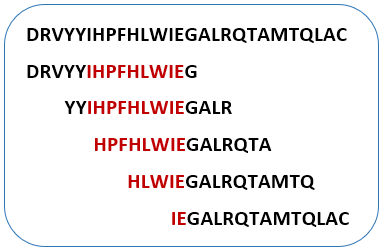
Overlapping Peptide Library
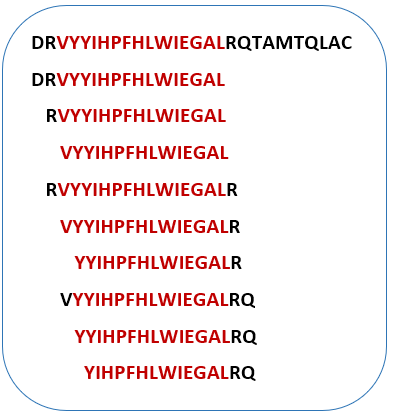
An overlapping peptide library divides a protein or peptide sequence into a series of partially overlapping fragments. The peptide length and overlap can be adjusted according to the experimental design.
This format is commonly used for epitope mapping, antigen screening, protein-region mapping, and identification of biologically active sequence regions.
Positional Peptide Library
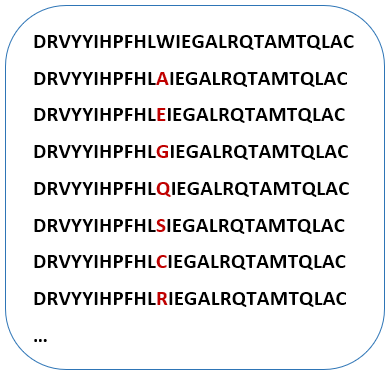
A positional peptide library systematically substitutes amino acids at selected positions within a peptide sequence while the remaining sequence is kept constant.
This approach is useful for sequence optimization, residue-tolerance studies, and structure–activity relationship analysis.
Alanine Scanning Peptide Library
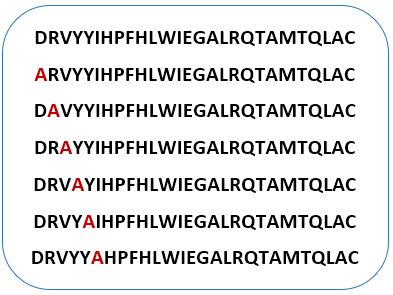
An alanine scanning peptide library systematically replaces individual residues with alanine while preserving the rest of the peptide sequence.
By comparing the activity of each variant with the original peptide, researchers can identify amino acid residues that are important for binding, recognition, or biological activity.
Truncation Peptide Library
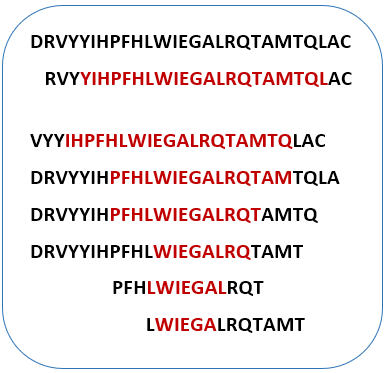
A truncation peptide library contains progressively shortened versions of a parent peptide generated by removing residues from the N-terminus, C-terminus, or both termini.
Truncation analysis can help identify the minimum sequence required for binding or biological activity and can be used together with alanine scanning during peptide optimization.
T-Cell Epitope Peptide Library
A T-cell epitope peptide library uses a series of overlapping peptide sequences derived from a target protein to evaluate potential T-cell recognition regions.
This strategy is commonly used in T-cell epitope mapping, immunology, vaccine research, and immune-response studies.
Scrambled Peptide Library
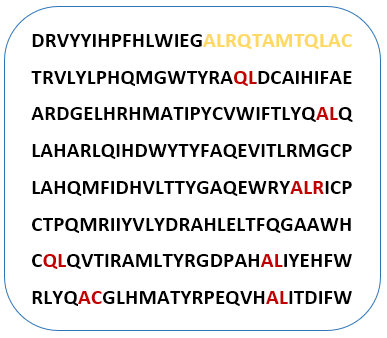
A scrambled peptide library contains sequence variants in which the amino acids of the original peptide are rearranged while maintaining the same or similar overall amino acid composition.
Scrambled peptides are useful for evaluating sequence specificity, experimental controls, and the relationship between amino acid order and peptide activity.
Choosing the Right Peptide Library
| Research Goal | Recommended Library Strategy |
| Epitope or active-region mapping | Overlapping Peptide Library |
| Identify key amino acid residues | Alanine Scanning Library |
| Optimize individual sequence positions | Positional Peptide Library |
| Determine the minimum active sequence | Truncation Peptide Library |
| Map potential T-cell epitopes | T-Cell Epitope Peptide Library |
| Create sequence-specific controls | Scrambled Peptide Library |
Custom Library Options
Peptide libraries can be customized according to sequence, peptide length, number of peptides, quantity, purity, terminal modifications, fluorescent labeling, biotinylation, D- or non-natural amino acids, and other project-specific requirements.
TFA removal, endotoxin control, and additional analytical requirements can also be discussed when needed.
For peptide analytical information, visit ourPeptide Quality Control Report.
Start Your Peptide Library Project
Send us your target protein or peptide sequence, preferred library strategy, peptide length, overlap or substitution requirements, quantity, purity, and modifications for project evaluation.
If the optimal library design has not yet been determined, our scientific team can review the research objective and help select an appropriate peptide library strategy.
Explore ourCustom Peptide Synthesiscapabilities for individual peptide projects.